Industry

Technology for recruitment and HR businesses

Build systems that connect candidate data, vacancies, recruiters, clients, documents, communication and management intelligence, with AI used for matching, screening, search, drafting and workflow support where appropriate.

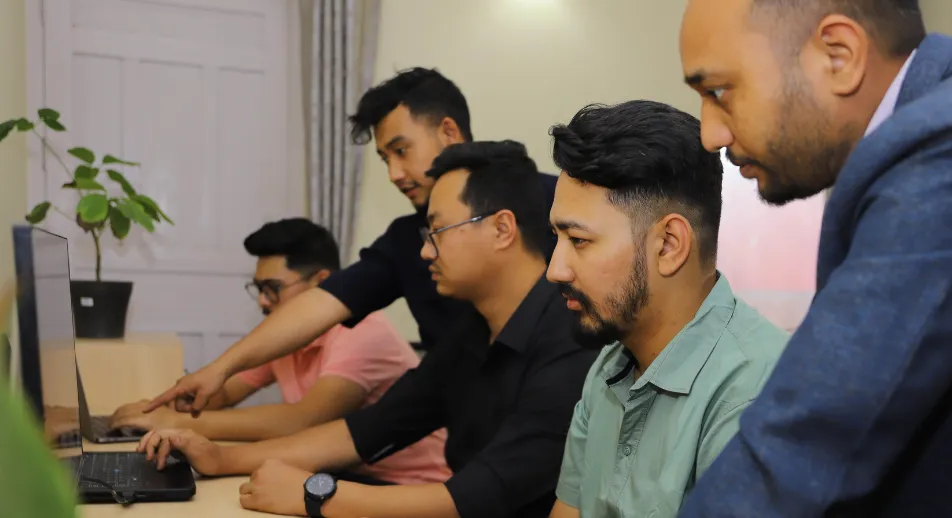
Clock b team reviewing a system on screen

Where businesses get stuck

Data in many places

Candidates, vacancies and client notes spread across spreadsheets, inboxes and chat.

Manual matching

Recruiters search and shortlist by hand, so good candidates are missed.

No management view

Leaders cannot see the pipeline without asking for a report.

What we digitize and automate

  • Candidate profiles and vacancy records in one system
  • Candidate matching and screening
  • Recruiter workflows and client communication
  • Document handling and data extraction
  • Management visibility across the pipeline
  • AI-assisted search and drafting

Built by Clock b

A recruitment platform we built

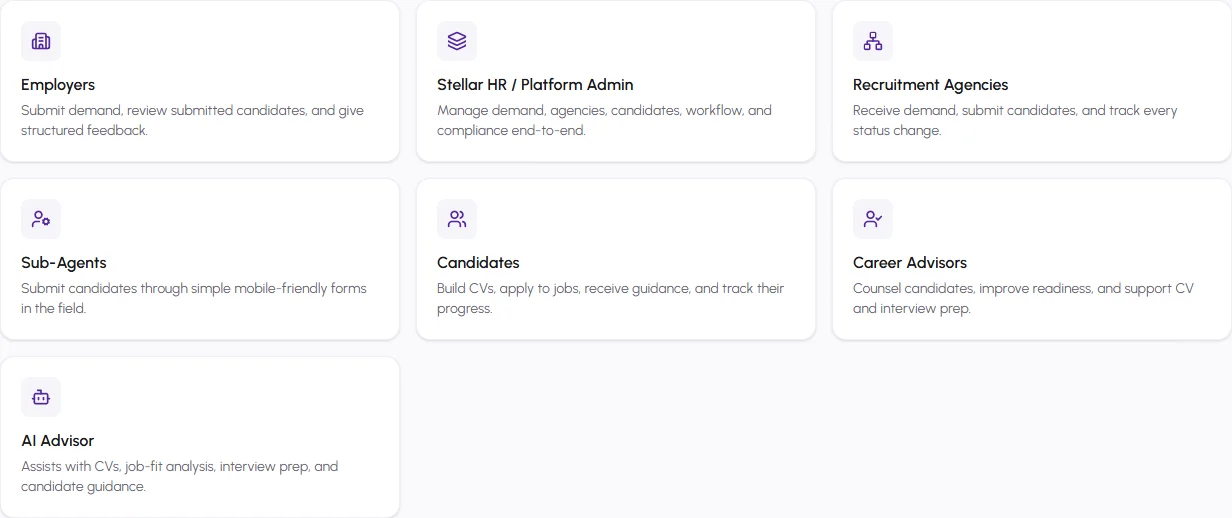
FindHR.ai puts employers, agencies, candidates and advisors on one structured hiring chain.

FindHR.ai workspaces for employers, platform admins, recruitment agencies, sub-agents, candidates, career advisors and an AI advisor
FindHR.ai logoLive

FindHR.ai · Recruitment infrastructure

An AI-native platform that connects employers, recruitment agencies, sub-agents, candidates and career advisors, from employer demand through screening and shortlisting to selection and deployment.

  • Employer demand intake, with structured feedback on submitted candidates
  • Agency and sub-agent submissions, including mobile-friendly forms for the field
  • Candidate profiles and CVs with AI matching and job-fit analysis
  • Pipeline tracking from shortlist to deployment, with every status change recorded
  • An AI advisor for CV help, interview preparation and candidate guidance
  • Cross-border hiring
  • Consent-first
  • AI matching

How we start

Every engagement begins with a Business Technology Assessment, not a build.

  1. Map

    Current process, tools, data and bottlenecks.

  2. Identify

    What to simplify, digitize or automate first.

  3. Check AI fit

    Where AI genuinely adds value, and where it does not.

  4. Prioritise

    A ranked list of what is worth doing.

  5. Roadmap

    A technology roadmap you can act on.

Tell us about your business

Share the process you want to improve and we will suggest where to start.